Macroeconomic Outlook: The Data Point That Could Reset Market Expectations
September's Nonfarm Payrolls report could reset expectations for the Fed, the US dollar and gold. Here are the four numbers prop firm traders should watch, and how to manage risk around the release.
The US Nonfarm Payrolls (NFP) report is one of the most watched economic releases in the trading calendar, and this month's report comes at an important time for financial markets. The September employment report is scheduled for Friday, October 2, at 8:30 a.m. ET. Current economist estimates point to around 90,000 new jobs, with the unemployment rate expected to remain at 4.1%. However, forecasts vary widely, which means there is still plenty of room for a surprise.
For prop firm traders, NFP is not simply about whether the number is above or below expectations. The market is looking at the full picture: payroll growth, unemployment, wage growth, revisions to previous months, and what the data could mean for Federal Reserve policy. This makes the release especially important for assets such as USD pairs, gold, US indices, and Treasury yields.
Why This NFP Report Matters
The Federal Reserve recently raised its federal funds target range by 25 basis points to 3.75%–4.00%, saying that inflation remains elevated while economic activity and the labor market remain broadly solid. That makes the employment data especially relevant.
If the labor market remains stronger than expected, traders may see less pressure for the Fed to ease policy. If employment shows clearer signs of weakness, markets could reassess the path of interest rates.
This does not mean that a strong NFP automatically means a stronger dollar or that a weak report automatically means a weaker dollar. Markets react to the difference between expectations and the actual data, as well as the other parts of the report.
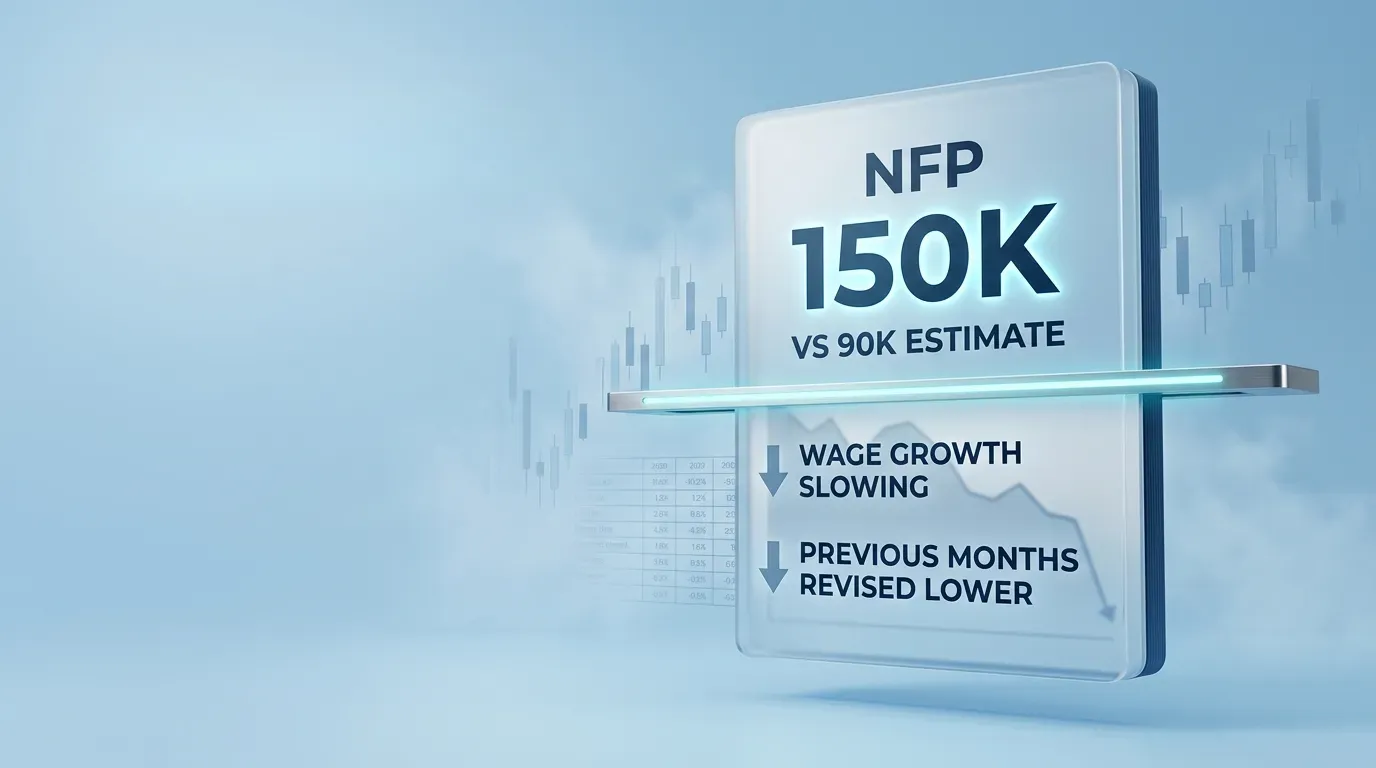
For example, imagine payrolls come in at 150,000 against a 90,000 estimate, but wage growth slows sharply and previous months are revised lower. The headline looks strong, but the details may tell a different story.
That is why experienced traders look beyond the first number.
What Happened in the Previous NFP?
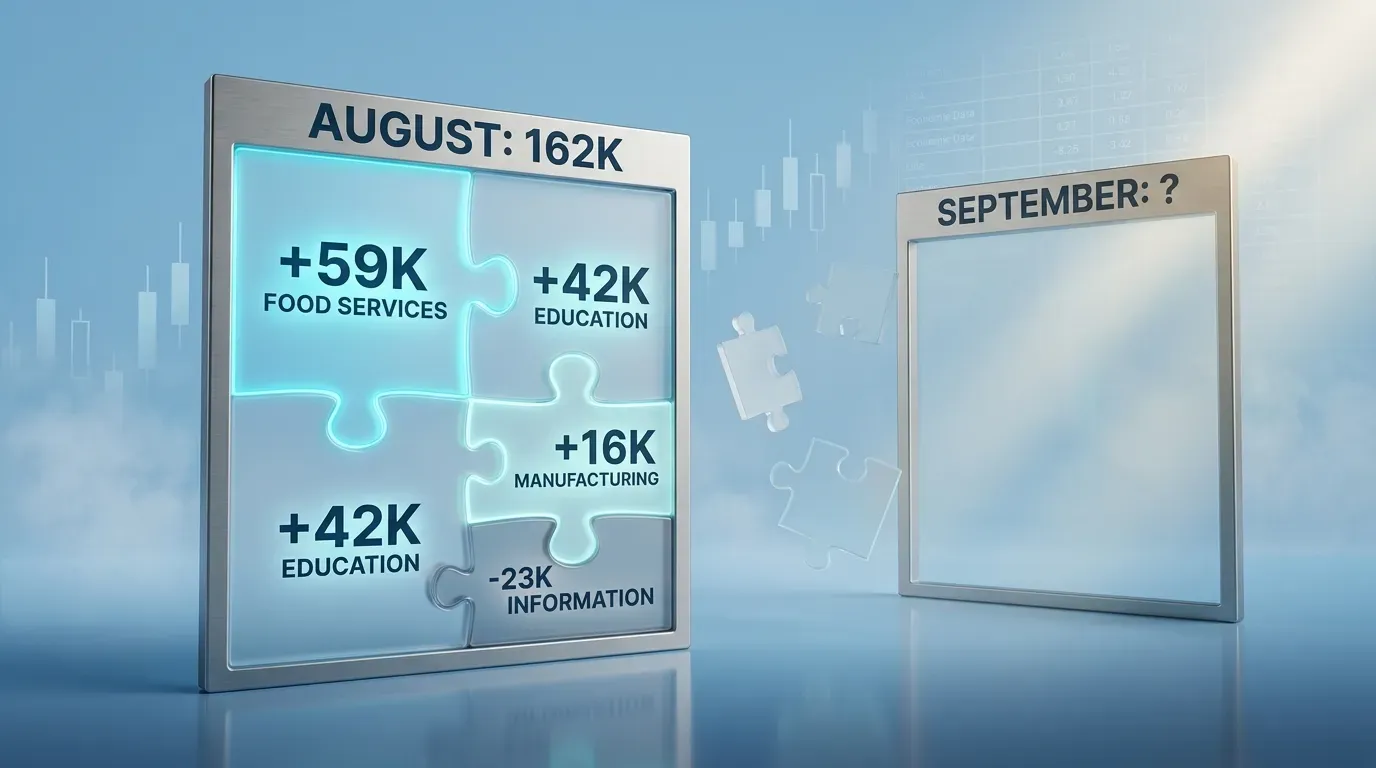
The August report showed a surprisingly strong increase of 162,000 jobs, while unemployment remained at 4.1%. Payroll gains were much higher than the average monthly gain over the previous 12 months.
There were also some important details behind that headline. Food services and drinking places added 59,000 jobs, local government education added 42,000, while information employment fell by 23,000. Manufacturing added 16,000 jobs, while health care continued to grow but at a slower pace.
The report also showed average hourly earnings rising 0.3% month-over-month and 3.1% year-over-year. Previous months were revised higher, with June and July combined revised up by 55,000 jobs.
What Other Data Is Telling Us
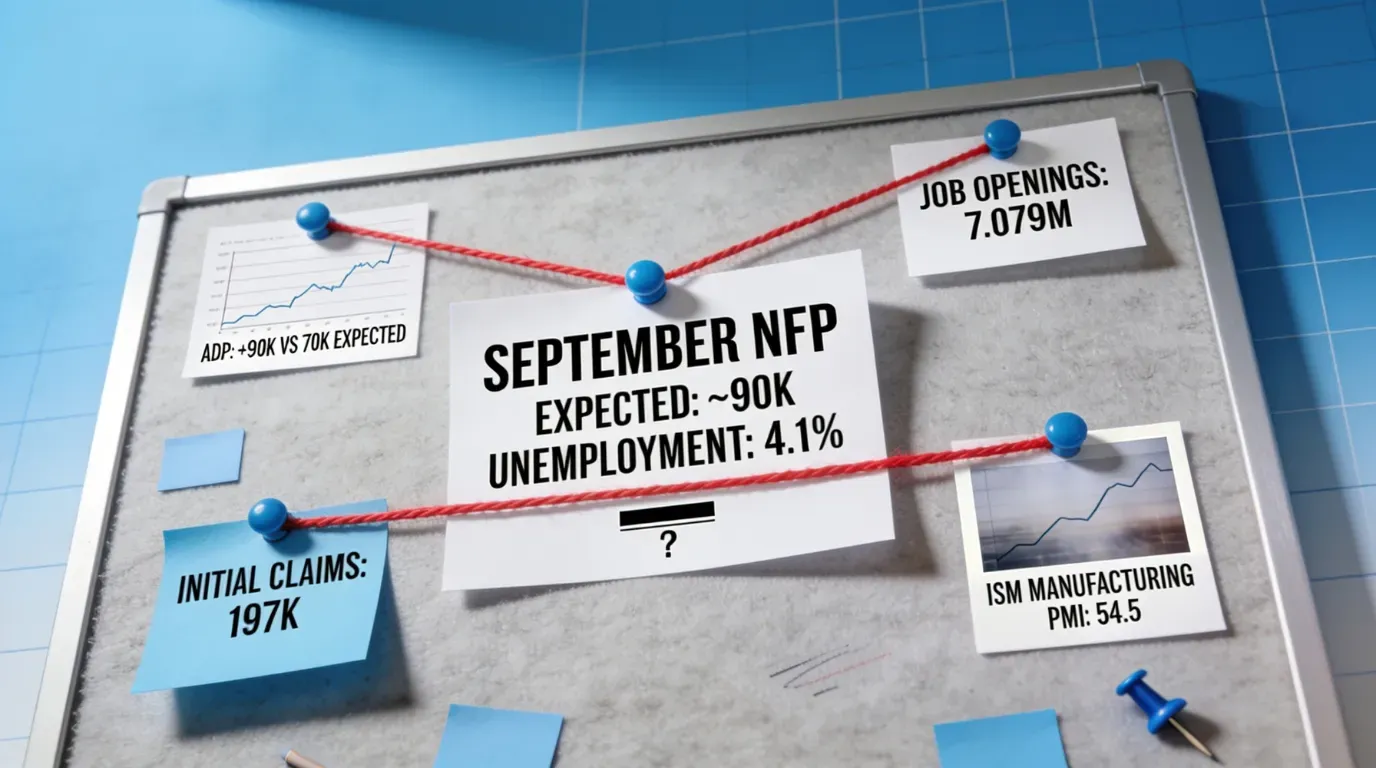
NFP should never be viewed in isolation. Several other releases during the week have already given traders clues about the labor market. The September ADP report showed private employment increasing by 90,000, above the 70,000 economists had expected. At the same time, Reuters' survey of economists puts September nonfarm payroll growth around 90,000, with unemployment expected to remain at 4.1%.
Job openings also fell in August to 7.079 million, although layoffs remained low. This suggests that labor demand has cooled somewhat without showing signs of a major deterioration.
Weekly unemployment claims tell a similar story. Initial claims were 197,000 in the week ending September 26, while the four-week average was 200,000.
There is also some evidence of continued strength in manufacturing. The September ISM Manufacturing PMI came in at 54.5, with the employment index rising to 52.7. However, the report also showed a sharp increase in its prices index, highlighting continued price pressure in the manufacturing sector.
Taken together, these indicators do not give traders a simple "strong" or "weak" answer. They show a labor market that is still functioning, but with some signs of cooling and uncertainty.
The Four Numbers Traders Should Watch
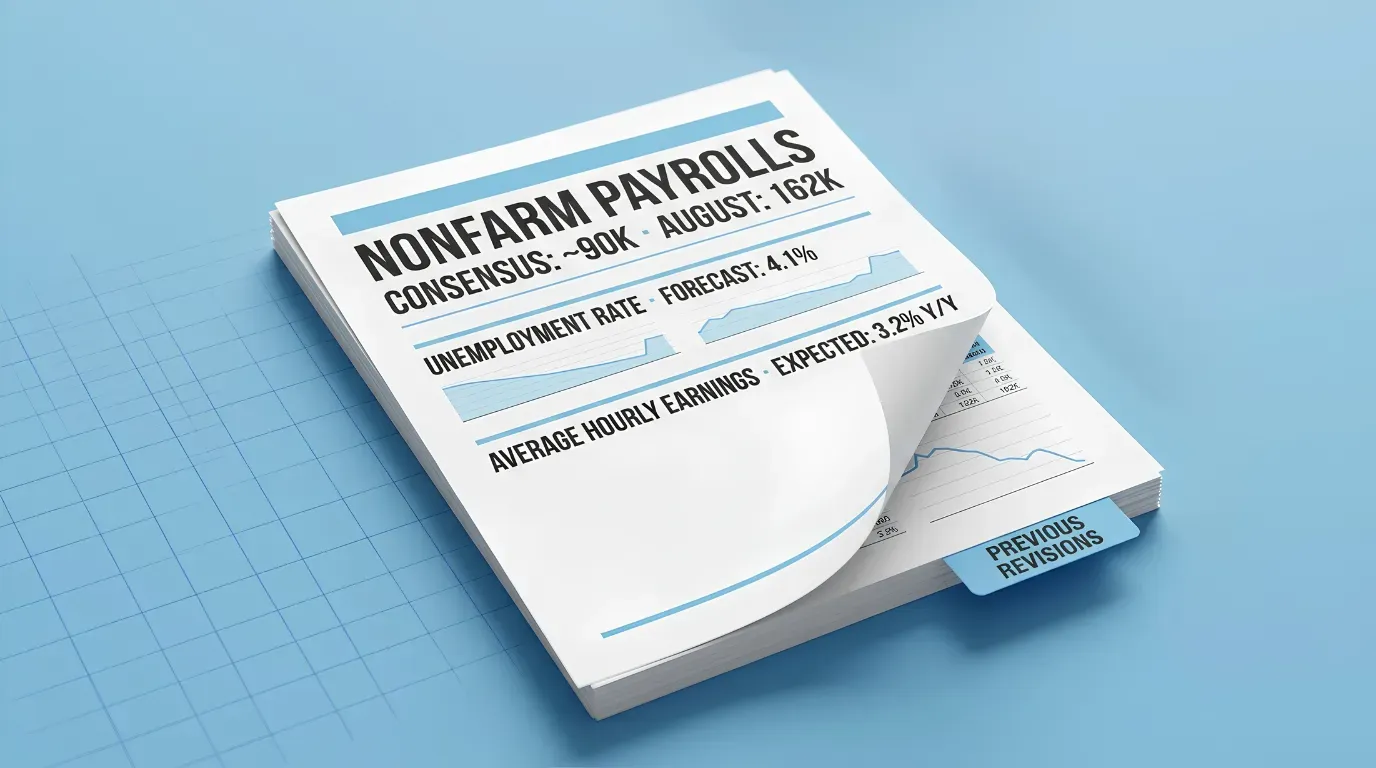
When the NFP release arrives, the headline payroll number will probably get most of the attention. But there are several pieces of information worth watching.
1. Nonfarm Payrolls
This is the headline job-change number. The current Reuters consensus is around 90,000 jobs for September, compared with 162,000 in August.
2. Unemployment Rate
The forecast is for 4.1%, which would keep the rate unchanged for a third consecutive month.
3. Average Hourly Earnings
Wage growth matters because stronger wages can support consumer spending and potentially add to inflation pressure. August showed annual wage growth of 3.1%. Reuters' latest preview expects September wage growth to be around 3.2% year-over-year.
4. Previous Revisions
This is one of the easiest parts of the report to overlook. A headline number can initially look strong, but large downward revisions to previous months can change the overall picture. Traders should therefore avoid reacting to the first number without checking the revisions.
What Could It Mean for Prop Firm Traders?
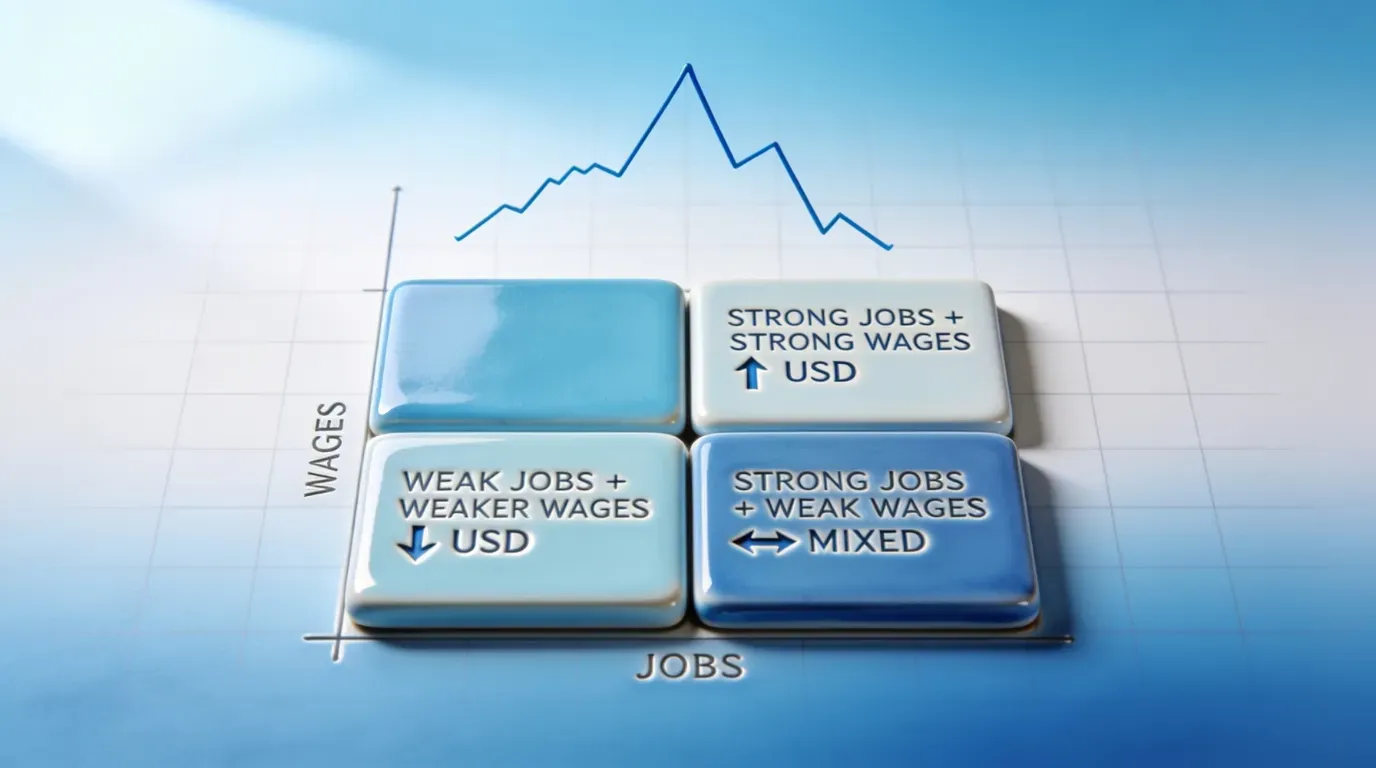
The biggest mistake around NFP is trying to predict the exact direction before the release. Instead, traders can prepare different scenarios. For example:
- Strong jobs + strong wages: The market may see less reason for easier Fed policy, potentially supporting the USD and pushing Treasury yields higher.
- Weak jobs + weaker wages: Rate expectations could move in the opposite direction, potentially putting pressure on the USD.
- Strong jobs + weak wages: The reaction may be mixed because the headline and inflation signal point in different directions.
- Weak jobs + strong wages: Again, the market may struggle to interpret the data immediately.
This is why the first few minutes after NFP can be difficult to trade. A trader might see EUR/USD move sharply higher, enter a position, and then watch price reverse seconds later as the market reacts to another part of the report.
For a funded trader, that kind of volatility makes position sizing and risk management especially important. A setup that normally carries 0.5% risk can behave very differently when liquidity and spreads change around a major economic release.
If trading news events is part of your strategy, you can still engage through reputable prop firms that permit news trading without restrictions, like Funded Trader Markets, where you can trade all affected currency pairs and more.
You Don't Have to Trade the NFP
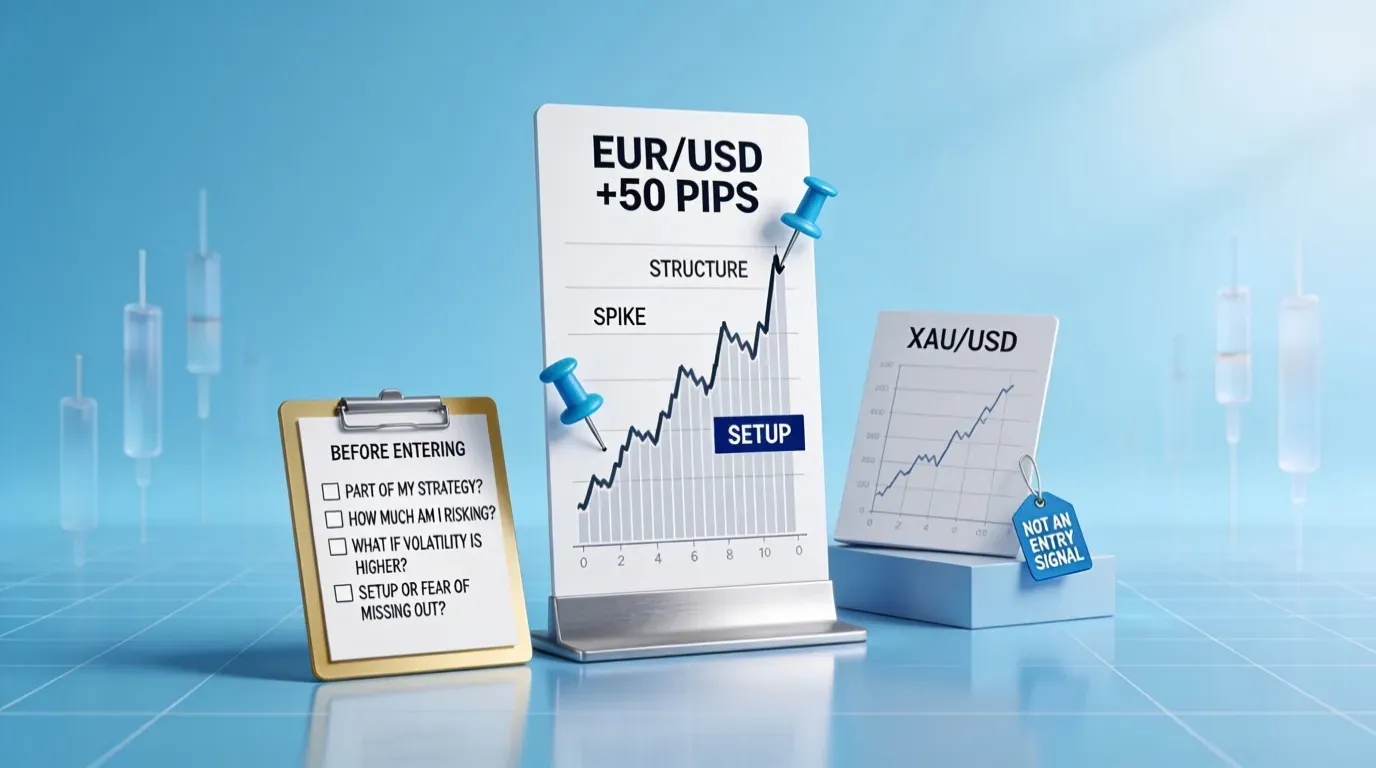
There is no requirement to trade every major market event. For some prop firm traders, the best approach may be to wait for the initial volatility to settle and then look for a technical setup.
Imagine EUR/USD spikes 50 pips immediately after the report. Instead of chasing the move, a trader could wait for the market to establish structure and then look for a familiar setup based on their normal strategy.
The same principle applies to XAU/USD. Gold can react strongly to changes in the US dollar and interest-rate expectations, but a large candle is not automatically an entry signal. Waiting for confirmation can be more important than being first.
The key questions before trading should be simple:
- Is this setup part of my strategy?
- How much am I risking?
- What happens if volatility is much higher than normal?
- Am I entering because of my setup or because I fear missing the move?
The Bigger Picture: NFP Is About the Fed
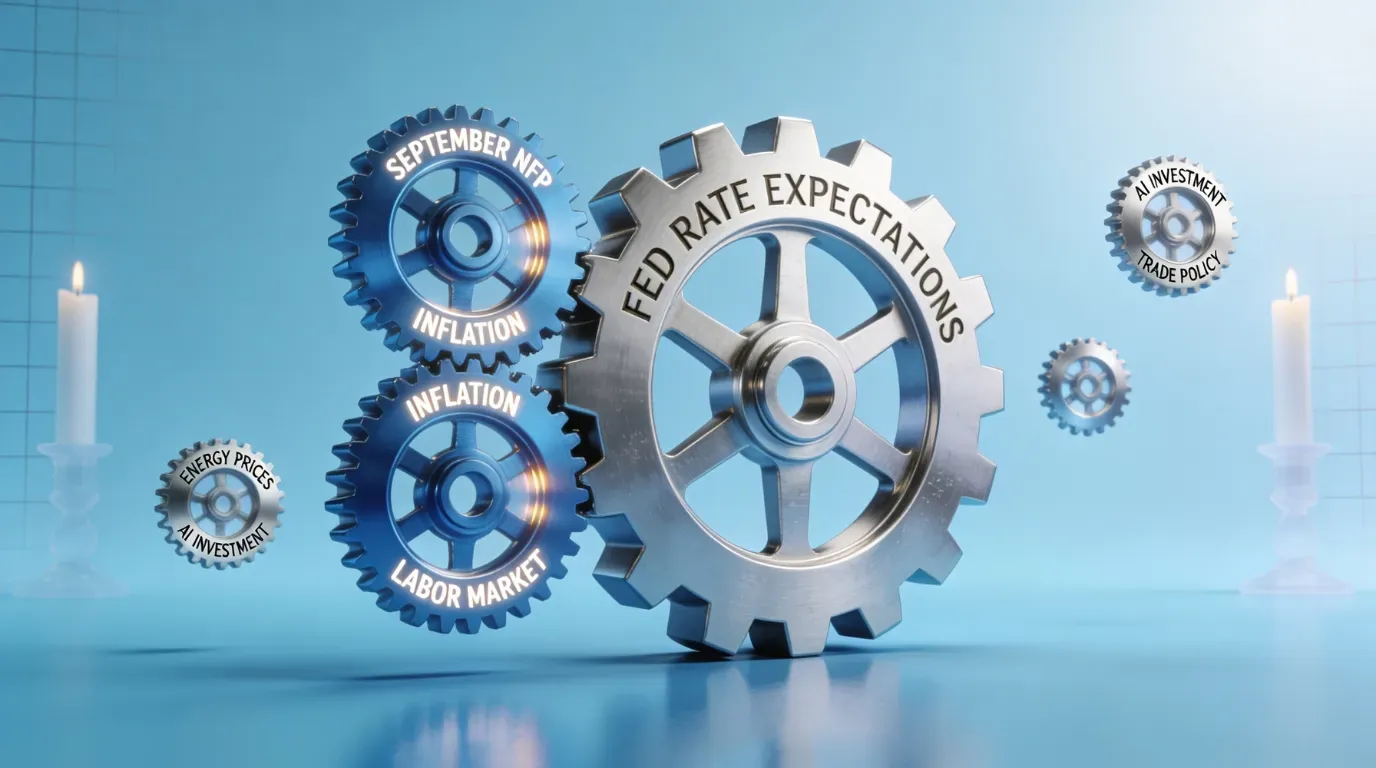
Ultimately, traders are not watching NFP simply because they care about the number of jobs created. They are watching because employment data can influence expectations for Federal Reserve policy.
The Fed has said that inflation remains elevated and that it is watching economic developments closely. Vice Chair Philip Jefferson also noted this week that the economy and labor market remained broadly solid while inflation was above target, while highlighting the uncertainty created by energy prices, AI investment and trade-policy changes.
That means the September jobs report will become another piece of the larger puzzle. One report does not determine the entire economic outlook. But when the market is already sensitive to interest rates, inflation and labor-market conditions, a meaningful surprise can quickly change expectations.
Final Thoughts
NFP is one of the biggest events on the economic calendar, but successful trading around it is not about guessing the number correctly.
For prop firm traders, the more useful approach is to understand the bigger picture, know what the market expects, watch the details inside the report, and manage risk when volatility increases.
The September 2026 report comes with a wide range of possible outcomes. The current consensus is around 90,000 jobs and a 4.1% unemployment rate, but the forecast range is wide enough for a meaningful surprise.
Whether the report is stronger or weaker than expected, the same principle applies: you do not need to catch the first move. Wait for your setup, respect your risk, and let the market show you what it wants to do. For funded traders, protecting the account will always matter more than winning one NFP trade.
Iker Mendoza, Senior Technical Analyst
Iker has 12 years of experience in forex and index trading, with a focus on systematic strategies that scale across volatility regimes. He covers price action, breakout setups, and the structural mechanics of evaluation accounts. At FTM his content unpacks how strategy choice interacts with funded-account rules: which setups survive trailing drawdown, which do not, and why position sizing matters more than entry timing for evaluation pass rates.