Macroeconomic Outlook: The Key Events Prop Firm Traders Should Watch This Week
UK CPI, US retail sales, the Federal Reserve, the Bank of England and the Bank of Japan all land between September 14 and 18. Here is what each release means for prop firm traders — and why staying out is sometimes the right call.
The week of September 14th – 18th could be significant for financial markets, with key economic data and central bank decisions. For prop firm traders, understanding the fundamentals is as crucial as chart analysis. Markets will watch inflation, employment, interest rates, spending, and guidance from the US, UK, and other major economies. While not every release will cause a big move, several high-impact events in a short time can increase volatility.
Monday and Tuesday: The Week Starts With Labor and Inflation Expectations
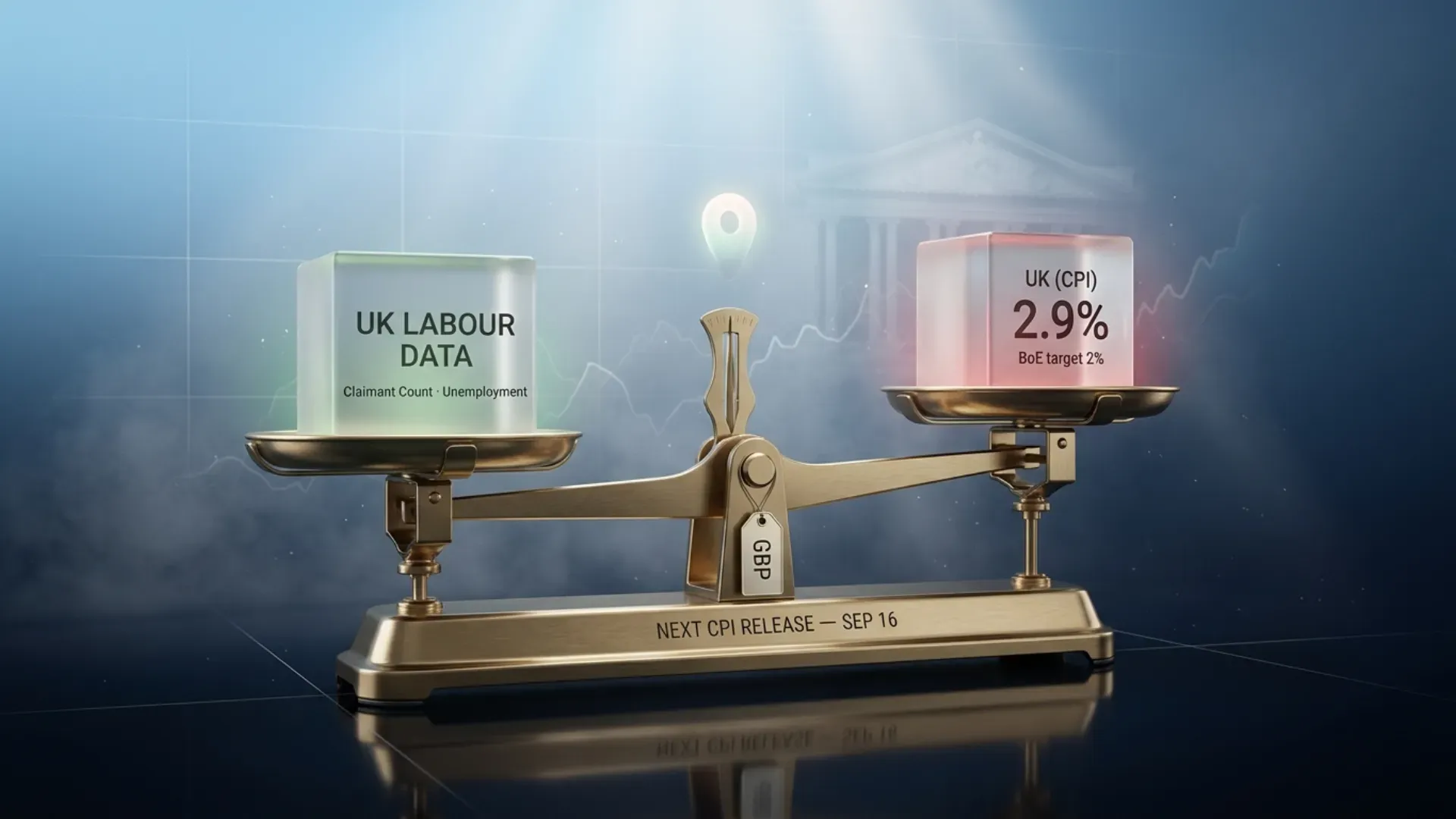
The UK labour market data on Tuesday, including Claimant Count and unemployment figures, will be a key focus. Employment data influences Bank of England's interest rate decisions. Weak employment may lead traders to expect lower rates, while strong data could suggest the economy can handle higher rates longer.
For a prop firm trader, the key isn't just whether the number is "good" or "bad," but how it compares with expectations and affects future interest-rate views. For example, rising unemployment with strong wage growth could send mixed signals, causing GBP pairs to react sharply as traders anticipate the Bank of England's next move.
Tuesday's data can set the tone for Wednesday, when the UK CPI report is a major event. Current UK CPI is 2.9%, with the Bank of England's target at 2%. The next CPI release is on September 16.
Wednesday: Inflation, Consumer Spending and the Federal Reserve
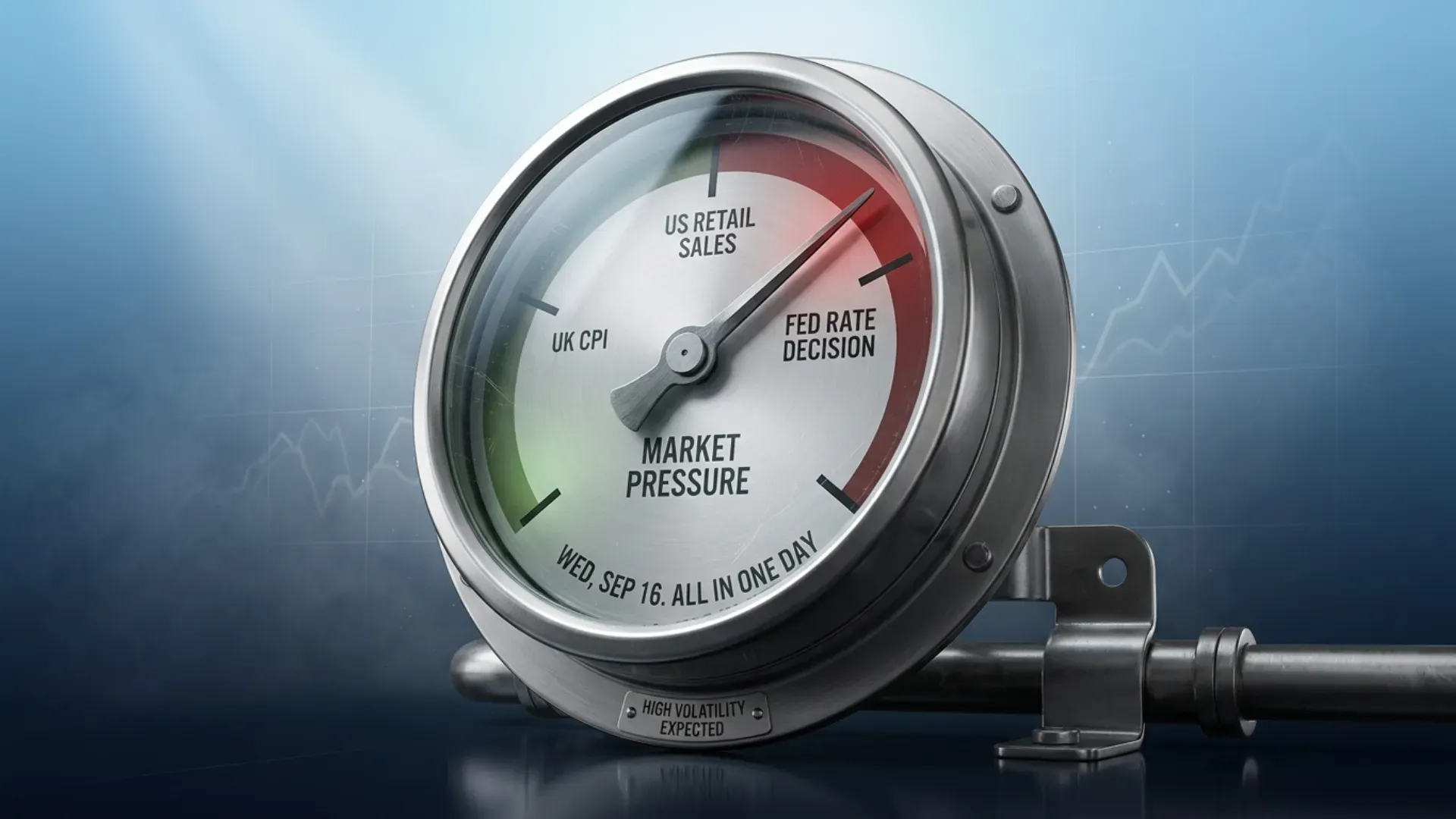
Wednesday is likely the week's busiest day, with UK CPI first, then US retail sales, and later the Federal Reserve's rate decision, projections, and press conference. The Fed meeting is key, not just for the rate decision but also for updated projections and policymakers' language.
The relationship between inflation, growth, and interest rates is central to this week's macro outlook. Sticky inflation limits central banks' room to cut rates. If inflation falls but spending and employment weaken, markets might expect more supportive monetary policy.
For example, if US retail sales surpass expectations and inflation stays high, traders might see this as a sign of a strong economy that supports higher interest rates for longer. This could affect the US dollar, Treasury yields, gold, and major indices. Conversely, a different combination could trigger a varied response.
For funded traders, risk management is vital. Holding EUR/USD, GBP/USD, XAU/USD, or US indices before the FOMC decision can lead to volatility. A seemingly safe position on a short-term chart can act differently during major news.
Thursday and Friday: BoE, Housing Data and the Bank of Japan
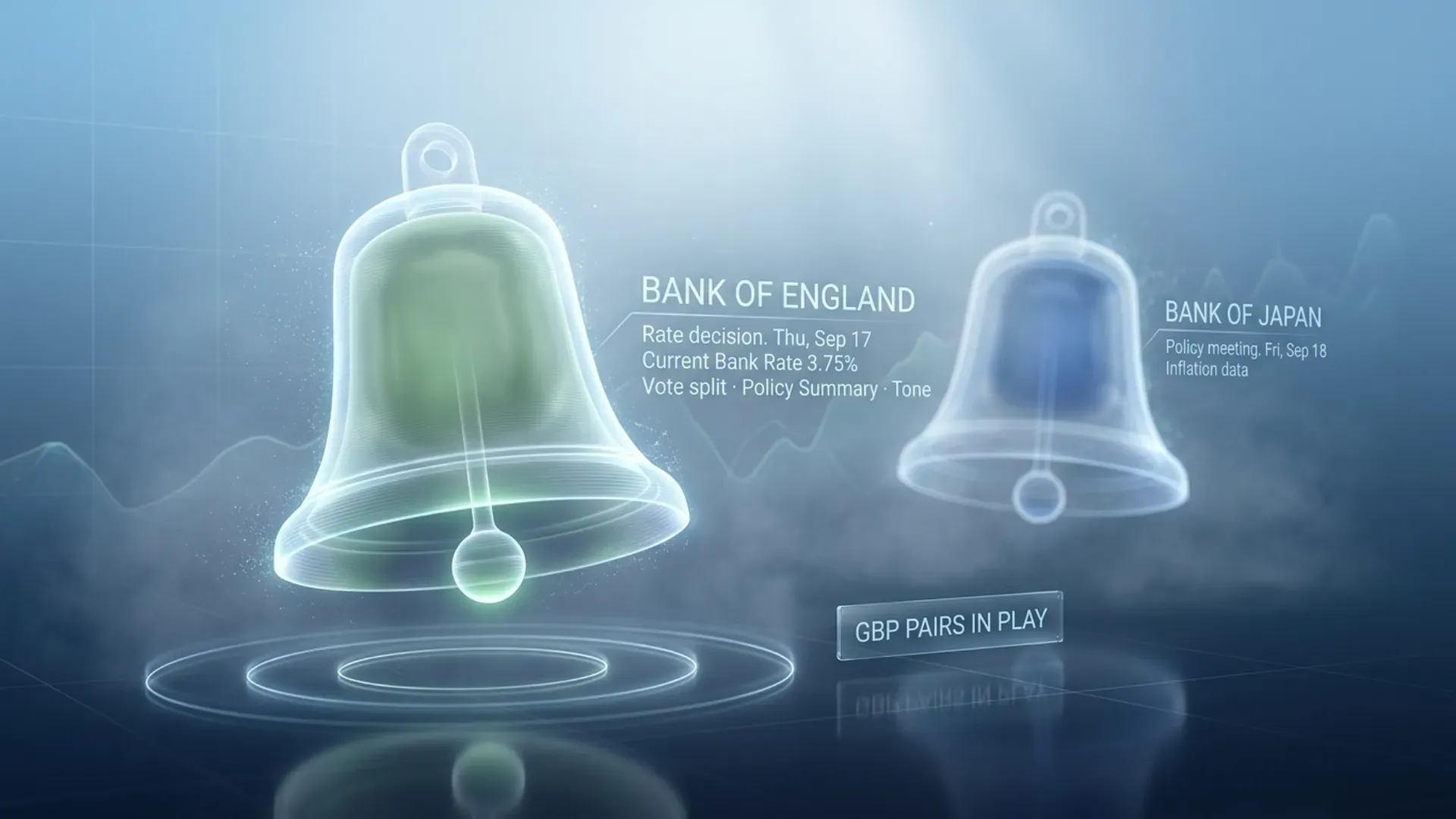
Thursday brings another major central bank event: the Bank of England's interest-rate decision. The current UK Bank Rate is 3.75%, and the next MPC announcement is scheduled for September 17.
The market will watch more than the rate, focusing on the voting split, the Monetary Policy Summary, and tone. While rates may stay unchanged, shifts in voting or stronger inflation language could still impact GBP pairs.
The US releases housing data on Thursday, including permits and starts, which can signal economic strength. On Friday, focus shifts to Japan as the Bank of Japan holds its policy meeting and releases inflation data.
What Should Prop Firm Traders Actually Do With This Information?

A macroeconomic outlook isn't a signal to buy or sell, but it helps you understand market behavior. For example, a liquidity sweep trader may wait for standard market confirmation but knows a major announcement is near and can adjust exposure.
Before trading a high-impact event, it can help to check:
- What economic release is coming?
- What is the market expecting?
- What was the previous result?
- Which currencies or assets are most directly affected?
Staying out isn't wrong. For a prop firm trader, protecting a funded account outweighs catching every move. Missing a 100-point move isn't a bad decision if they safeguard their drawdown. There will always be another setup.
If trading news events is part of your strategy, you can still engage through reputable prop firms that permit news trading without restrictions, like Funded Trader Markets, where you can trade all affected currency pairs and more.
Remember, the goal isn't to predict every announcement but to recognize market-moving reasons, understand potential narrative changes, and manage risk. With inflation data, employment figures, central bank decisions, and economic projections, preparation is as important as the trade.
Iker Mendoza, Senior Technical Analyst
Iker has 12 years of experience in forex and index trading, with a focus on systematic strategies that scale across volatility regimes. He covers price action, breakout setups, and the structural mechanics of evaluation accounts. At FTM his content unpacks how strategy choice interacts with funded-account rules: which setups survive trailing drawdown, which do not, and why position sizing matters more than entry timing for evaluation pass rates.